
Argentina Week 2026: Why the Early Mover Wins

Have you ever noticed how the most important opportunities rarely announce themselves clearly?
They tend to arrive dressed in subtlety, a news item here, a signed agreement there, while the full picture is only now coming into focus. And by the time everyone agrees that something is a great opportunity, the best part of it is already gone.
Right now, something significant is happening with Argentina.
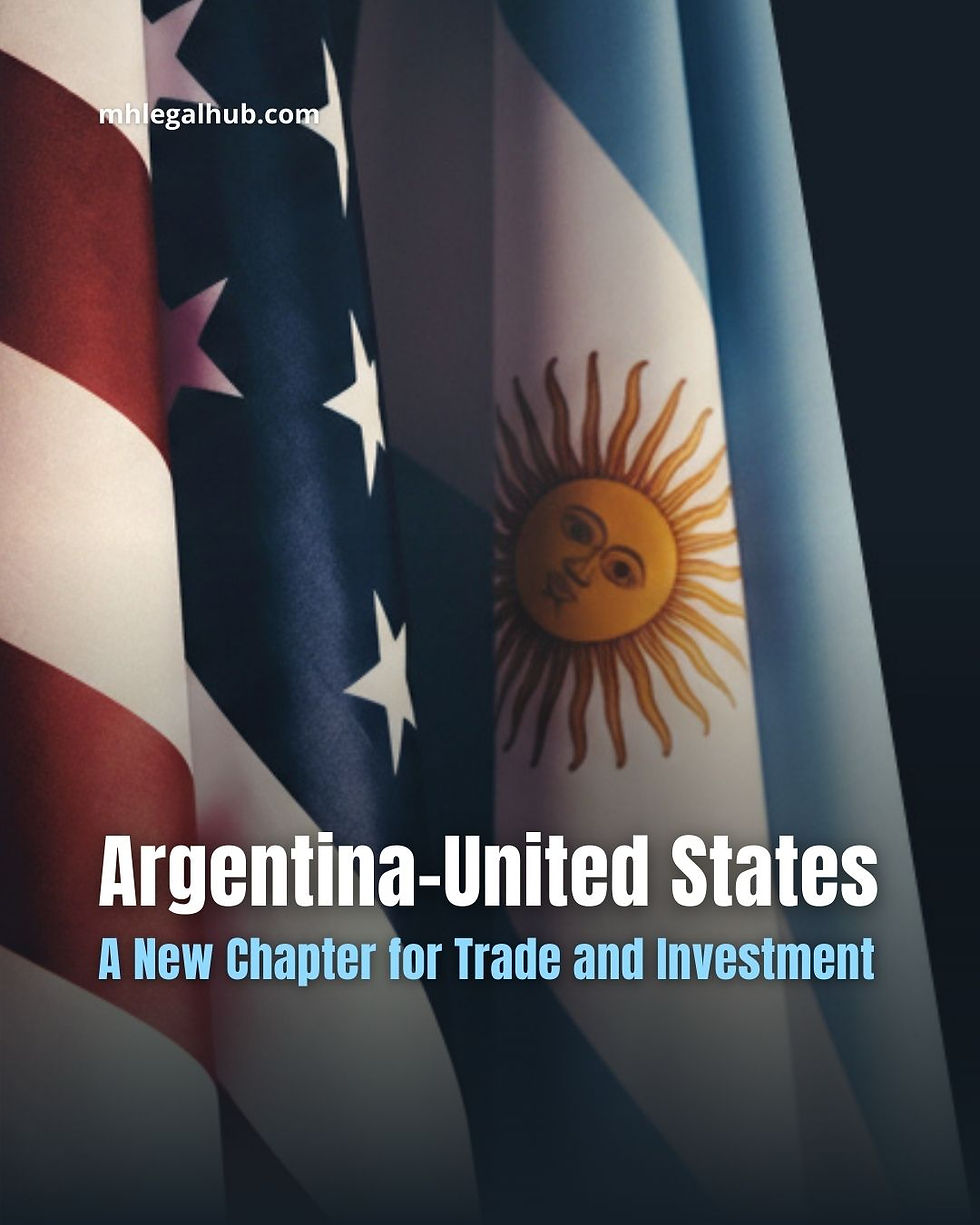
Let's start with the institutional front. On February 5, 2026, Ambassador Jamieson Greer joined Argentina's Minister of Foreign Affairs Pablo Quirno in signing the United States-Argentina Agreement on Reciprocal Trade and Investment. This is not a press release. Argentina was the first of four Latin American countries to complete a framework agreement announced by the Trump administration, the others being Ecuador, El Salvador, and Guatemala. Being first matters.
The agreement has concrete weight behind it. The US will eliminate reciprocal tariffs on 1,675 Argentine products across various productive sectors, with recovered exports estimated at over one billion dollars. The preferential access quota for Argentine beef was also expanded to 100,000 tons, four times the current level, which would allow the sector's exports to increase by approximately 800 million dollars. According to Aduana News, for sectors like agro-export, the math is starting to look compelling.
Then there is Argentina Week.
In November 2025, during a visit to the Council of the Americas, Milei presented his economic program to executives of global companies including Glencore, Continental Grain, Morgan Stanley, Pfizer, and Cisco. Susan Segal, president of the Council, praised Milei's structural reform proposals as an opportunity to reactivate investment in the country.
Following Forbes Argentina, that groundwork is now bearing fruit. The event, organized by the Argentine Embassy together with J.P. Morgan, Bank of America, and Kaszek, will bring together government authorities, global business leaders, banks, investment funds, and companies from energy, mining, technology, infrastructure, and other strategic sectors.
Registration closed early after capacity was exceeded, and the waiting list had to be shut as well. When the waiting list fills up with global CEOs, something has shifted in the perception of country risk.
The financial markets are paying attention too. Morgan Stanley's latest Latin America strategy report has placed Argentina among its preferred positions in the region, alongside Brazil, citing low valuations, high sensitivity to shifts in expectations, and export-oriented sectors with meaningful weight in the index. After years of structural skepticism, the bank's analysts note that the country's appeal stems not from explosive immediate growth, but from a gradual change in the risk equation.
But here is what tends to get lost in the coverage.
The opportunity is not limited to companies listed on public markets. Argentina's most interesting asymmetric potential sits in sectors that don't show up on a Bloomberg terminal: agro-export infrastructure, tech and fintech, real estate development, and energy. And the geography extends well beyond Buenos Aires. Provincial cities and regions with strong productive bases, and significantly lower entry prices, are where some of the most meaningful appreciation potential exists over the medium and long term.
Those with knowledge and access have always found better terms. That is true in every market, and Argentina is no exception. The window where you can enter before the consensus catches up, before the narrative becomes mainstream and prices reflect the new reality, is a finite one.
The road show is about to begin. The question is whether you will be in the room.
We work at the intersection of law, residency, and investment structuring in Argentina.
If you are thinking about what this moment means for you, whether that involves understanding how to position assets here, how to establish a legal presence, or how to navigate a regulatory environment that is being actively modernized, we would be glad to have that conversation.


Comments